Friday, October 1, 2010

Locals Only

A common question that comes up at the fish market and sushi bars is what's a good "local" fish?
Here's one that's not only local, but tasty too...


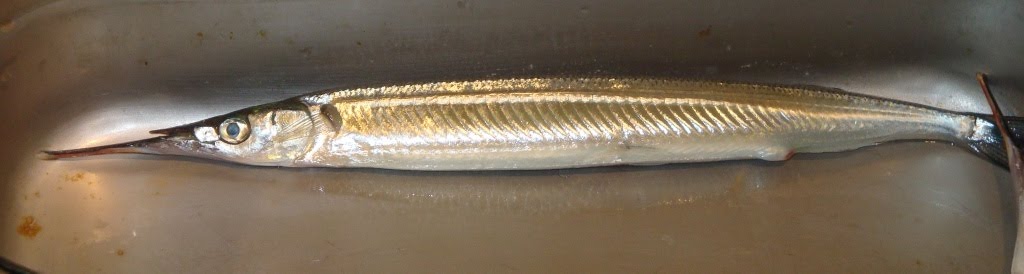
Local Sardine
Kazunori Nozawa of Sushi Nozawa says "local sardines are great" and Chef Tommy Kosaka of Sushi Dragon agrees.
Growing up in Tokyo, Chef Tommy learned that traditional sushi is using small fish from Tokyo Bay and sardines are what he grew up with. Besides it being traditional and sustainable, Chef Tommy also serves it because it's a healthy choice for his customers. Two of his regulars told him that their blood pressure had gone down because of eating more sardines.
Chef Nozawa only serves the very best and if you use locally grown or caught ingredients, it's even better. "It's costly but you have to do it the right way", says Nozawa-san.
Sardine Sashimi
Anytime you have a good product, you don't have to do much with it. My favorite way to really enjoy good sardines at the sushi bar is with ponzu (citrus soy sauce) and grated ginger. At home, I love them marinated in olive oil, a pinch of salt, and a squeeze of lemon.
Fried Sardine Bones
In the Asian culture, nothing gets thrown away, even the bones are fried and make a nice crunchy finish to a great fish dish.
"Sardines provide your body with proteins essential for building and maintaining muscle mass. Researchers also are investigating how fish oils may speed recovery from certain sports injuries", says The Sardine Diet. Studies indicate that Omega-3s may improve the healing of ligament injuries by accelerating collagen synthesis.
Regardless if you eat sardines for its health benefits or because they're sustainable, it's a great tasting fish.
Please continue to follow UMI as we bring you more information on great seafood and sushi, One Fish at a time... Please tell us what you think.

Chef Kazunori Nozawa
Sushi Nozawa
11288 Ventura Blvd. #C
Studio City, CA 91604
(818) 508-7017
Chef Tommy Kosaka
Sushi Dragon
8069 Vineland Ave
Sun Valley, CA 91352
(818) 768-4507
Article and photographs by Jeffrey Nitta and Jay Terauchi

Did You Know It's RAW?

Yes, that's how I ordered it. Sashimi translates to "fresh slice" and usually means raw seafood. If you walk into a sushi bar and it smells like fish, you should probably ask for the kitchen menu. Fresh seafood should smell like the ocean and doesn't have a fishy smell.

In a traditional Kaiseki multi-course meal, the sashimi course is served at the beginning. Heavier foods and dishes are served latter in the meal.


A Sashimi Course
At the sushi bar, the chef will always serve sashimi in odd numbered pieces, such as 3, 5, or 7. If you're served an even number, I would say they weren't trained in the traditional way or just have no idea.
Thinly Sliced White Fish
White fish is usually served with ponzu (citrus soy sauce), green onions, and grated daikon (giant white radish) with chili pepper.
Besides fish, sashimi also includes various types of seafood, including sea urchin (uni), spot prawns (amaebi), giant clam (mirugai), octupus (tako), etc.
Besides fresh fish, the thing about good sashimi si the freshly grated wasabi to go with it. Fresh wasabi isn't the hot, sinus blowing heat that we all know it to be. It's actually really flavorful and on the sweet side. But, we'll talk about fresh wasabi another time.
Freshly Grated Wasabi on a Sharkskin Grater
One of the best sashimi dishes that I've had was a plate of sliced albacore with fried garlic chips and dressed with olive oil, balsamic vinegar, and a squeeze of lemon, it was unbelievable.
Anytime you have a great fresh fish, you should have it in its purist form. UMI will continue to bring you information about fish and sushi, let's continue to eat and enjoy sushi.
Please share your sashimi experiences with us.
Domo Arigato
Article by Jeffrey Nitta and Jay Terauchi


Wednesday, August 11, 2010

Eating Local Amaebi

Not many people know that California is known for its spot prawns. The spot prawn, also known as "amaebi" in sushi bars, is actually a shrimp. Shrimp have small side flaps that overlap on the first through third abdominal segments and prawns have first and second anterior segments that are closely the same size. Its OK if you didn't notice that either...

Santa Barbara Spot Prawn
People who live on the West Coast are fortunate to be able to get live spot prawns, as they live up and down the coast. A lot of these prawns are caught in the Santa Barbara Channel and San Diego area. They're kept alive in cooled oxygenated tanks. Most of the spot prawns are sold alive, while the others are shipped frozen. Besides restaurants and speciality seafood markets, chances are that you won't find many live spot prawn tanks. Once they die, an enzyme spreads through the body and the meat becomes mushy.
Spot prawns have a very sweet flavor and in Japanese, "amaebi" means sweet shrimp. Most Japanese restaurants serve amaebi raw at the sushi bar.
I was visiting Sushi Dragon in Sun Valley this week. As one of my sushi bar favorites, I ordered "amaebi" sushi. I was lucky enough to get a spot prawn that was a female, so I was also served the "amaebi roe" with a quail egg. There isn't anything better than roe prepared properly with one of the freshest quail eggs I've ever had, they get them from local farmer.

Amaebi Roe (with Quail Egg) and Spot Prawn Sushi
Chef Tommy Kosaka at Sushi Dragon is an experienced chef who has the "head to tail" mind set and uses the entire fish or prawn in this case. For his customers, they're able to try a part of the fish that most have never had before. Chef Tommy spends a lot of his free time in and around the ocean, some mornings you can find him at a local beach surfing.

Deep Fried Amaebi Heads
And YES, the amaebi heads were served just after being served sushi. I realize that not many chefs have the background or training to serve most parts of fish in a delicious manner, meaning we don't want to have "Fear Factor" when dining out. I have some stories, but will have to be for another time... With the problem of overfishing, we must conserve our food supply for generations to come. You might even find out that you like a certain fish part that is usually discarded.
Stay tuned to UMI for more sushi tips and let's continue to eat sushi one fish at a time. If you visit Sushi Dragon, tell Chef Tommy to Hang Ten!
Chef Tommy Kosaka
Sushi Dragon
8069 Vineland Avenue
Sun Valley, CA 91352

Article and photographs by Jay Terauchi

Monday, May 10, 2010

Out of the Sea - Ocean Fresh Fish

Out of the Sea…

Over the past few months, we’ve met many chefs who have talked about the lesser known varieties of great tasting fish. We came across a few on a recent trip to Ocean Fresh Fish & Seafood Marketing Inc in Los Angeles. We saw a lot of different types of fish and here’s a few that caught our eye:


Striped Jack or Shima Aji

Have I got a recipe to introduce you to…

My All-Time Favorite – Spanish Mackerel


Unusual findings too…


So many chefs are talking about local sardines


UMI thanks Mr. Young Kim and Ocean Fresh Fish & Seafood Marketing Co., Inc for the visit, we’ll be back when we can spend more time.

We’re now off to try some different types of sushi and hope you do too, One Fish at a time…

Ocean Fresh Fish & Seafood Marketing Co., Inc.
1100 South Santa Fe Avenue
Los Angeles, CA 90021
(213) 622-3677

Article and Photos by Jay Terauchi and Jeffrey Nitta

Friday, April 9, 2010

A Hidden Sushi Gem - Sushi Hanada

When thinking about sushi in Los Angeles, a lot of well known celebrity places come to mind. We found a hidden sushi gem for some of the best sushi I've had outside of Japan, located about an hour North of Los Angeles.

We had the pleasure of being served by Chef Yuki Hanada of Sushi Hanada in Port Hueneme. You don’t find many traditional sushi places around anymore nor will you find a sushi chef that has the knowledge and experience that he has. Traditional sushi begins with the use of local fish and Chef Yuki uses the best possible local ingredients available.


Sashimi Course
Most people don’t understand is the importance of fish preparation; a good chef can bring out the flavor profile of seafood on so many levels. Chef Yuki is one of those master chefs who not only can create a beautiful dish, but also a very tasty one too.


(Left) Squid, Cherrystone Clam, Sea Eel

Chef Yuki’s doesn’t serve a lot of sushi rolls, so you won’t find rainbow rolls on the menu. But you will find some of the most flavorful fish and traditional sushi available. He's a true sushi master.

We thank Yuki-san for an evening filled with unbelievable sushi and great conversation. We’ll be back again…

(Left) Jay Terauchi, Nick Sakagami, Chef Yuki Hanada, Jeffrey Nitta
UMI will continue to introduce you to experienced chefs, One Fish at a time…
Please tell Chef Yuki that UMI says Hello!


Sushi Hanada
475 W. Channel Islands Blvd
Port Hueneme, CA 93041
(805) 984-7978

Wednesday, March 17, 2010

Edomae Sushi: How Today's Nigiri Sushi Began...

We don’t really know where sushi actually came from or who invented it. It can be said that sushi was a way to preserve fish and has been around for many centuries. Back then, whole fish would be salted and packed in steamed rice. A chemical reaction would occur and the fish would be preserved. Months later when it came time to eat the fish, the rice would be discarded and the fish eaten. Trevor Corson, author of “The Story of Sushi”, describes the taste of this early sushi as “pungent aged cheese, with butter and vinegar overtones.” It was much different than the pristine fish and rice that we enjoy today.

Edomae Sushi from the early 1800s

Description of the sushi above

This style of sushi dates back to the early 1800’s in Tokyo or Edo, as it was known back then. Edomae means “Tokyo Front” or Tokyo style of sushi with fish from Tokyo Bay. They used the local fish which they caught in the Tokyo Bay area. Majority of the seafood used was Sea Bream, Horse Mackerel, Squid, Mackerel, Tiger Prawns, Gizzard Shad, and many others. The sushi size (fish and rice) was much larger than today’s nigiri sushi and would be consumed in 2-3 bites.

Sushi was sold at stands around Edo (Tokyo), these stands were about the size of today’s hot dog carts. I guess you can say it was an early version of today's Fast Food. These sushi stands had a roof and a noren hanging over the stand, a cloth usually with the proprietor’s name on it. Back then, Zagat and Yelp weren’t around to help you decide where to eat. So you looked at the noren, the dirtier it was the better. Once customers finished with their sushi, they would wipe their hands on the cloth hanging above and go on their way. Hard to believe that sushi began in the streets.

Sushi originated from using local seafood. Ask your chef if they have any local fish and then try it, you might like it.

Continue to eat sushi and UMI will continue to educate you One Fish at a time.
Article by Jay Terauchi

Tuesday, March 2, 2010

"TUNA" on NHK World

The King of the Sushi Bar will be featured this Thursday (March 4th) on NHK World's "BEGIN Japanology". They'll take a look at Japan’s most popular fish, TUNA, and explore questions such as “As stocks decline and international quotas are adopted, can Japan’s voracious appetite for tuna be met through new methods such as breeding the fish from eggs?”

We'll be watching, will you? It shows that others are concerned about tuna too. Continue to enjoy sushi and follow UMI One Fish at a time. Arigato...

For more NHK World information on this program: http://tinyurl.com/ydmaln3